Information Technology and Business Process Management (IT-BPM The IT-BPM (Information Technology and Business Process Management) Industry is at the forefront of the global digital economy. It is the core enabler for digital transformation across all other sectors (like Healthcare, Manufacturing, and Banking) and is currently undergoing its most significant shift yet due to the rise of Artificial Intelligence (AI) and Hyperautomation.

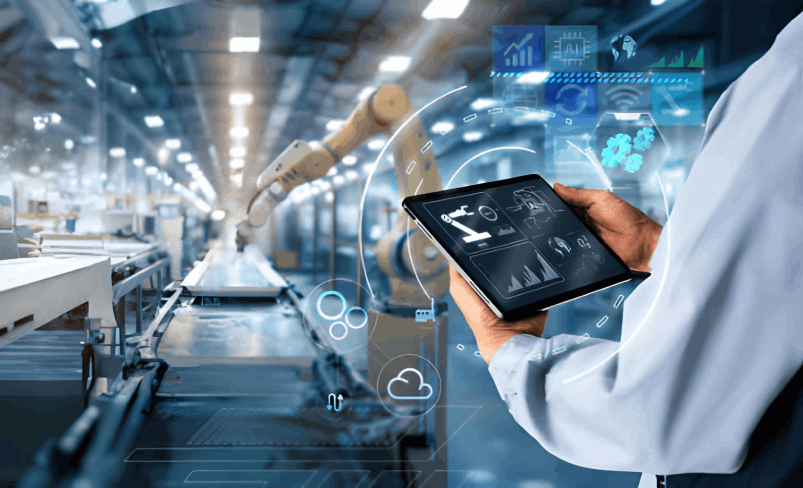
The IT-BPM market, particularly the Business Process Management (BPM) segment, is set for rapid growth driven by the need for efficiency and AI adoption.
| Metric | Current Value (2025) | Projected Value (2030) | Growth Rate (CAGR) |
| Global BPM Market (Core Focus) | Billion | Billion | 11.8% to 20.3% |
| India's Technology Sector (IT-BPM & Hardware) | Billion (FY24) | Target: $350 Billion (by 2030) | Strong growth driven by GCCs, ER&D, and digital services. |
The skills required are changing rapidly. There is a critical shortage of professionals skilled in AI, data science, cybersecurity, and human-AI collaboration. The industry must focus on rapid and continuous upskilling to match the pace of technology
Implementing modern BPM and AI solutions is extremely complex in organizations saddled with decades-old legacy systems that do not integrate easily, leading to data silos and high initial costs
As systems become more interconnected through cloud and AI, the exposure to sophisticated cyberattacks rises exponentially. Cybersecurity is no longer a cost center but a core strategic risk management function
The deployment of automation and AI faces high employee resistance to change, often due to fears of job displacement or increased workload during the transition phase. This requires a strong focus on clear communication and continuous user training


AI is the single biggest driver and disruptor. The focus is shifting from simple automation (RPA) to autonomous decision-making systems (Agentic AI). This means systems can perform complex, end-to-end tasks like managing entire financial workflows or customer service resolutions with minimal human oversight
Automation is moving from isolated tasks to integrated, enterprise-wide workflows. This combines RPA, AI, Process Mining, and LCNC platforms to create end-to-end digital processes. This improves operational efficiency and reduces human error
The computing backbone is becoming more distributed and specialized.Deploying AI and data processing closer to where the data is generated (e.g., in a factory, on a device) to ensure real-time insights and low latency. The number of edge devices is expected to exceed 50 billion by 2030
Firms are building distributed, strategic innovation hubs globally.Global firms are expanding their in-house innovation and technology centers (GCCs) in countries like India, creating highly specialized innovation hubs focused on advanced technologies like AI and R&D. This trend reinforces the shift from simple cost-arbitrage to value-creation.